


A Venerable Master
Translated from the original French text by Grand Master Nam Anh, 1999
The year 1984.
At a primary school in Chợ Lớn, at the end of the school day.
The room was shabby, cramped, and dreary, tucked away at the far end of a dim corridor. Beneath the pale, flickering light of an oil lamp, the sick man lying in bed looked all the more wretched, seemingly swallowed beneath a pile of blankets that had long since grown heavy with odor.
— Has no one come to clean the room for you, Master? I asked.
There was no reply. Only the creaking of the old bed broke the silence as I gently sat down to take the Master’s pulse. The pulse was deep and faint.1 I said:
— Please rest, Master. Let me cook some porridge and prepare your medicine.
The dry wood caught fire quickly. Flames danced around the battered pot. Since childhood, I had always loved fire — the reuniting flames of New Year’s Eve2, when families gathered warmly around the pot of bánh chưng, bound together by love and belonging. And the flame of life, burning since time immemorial, had illuminated my path — like a golden thread binding the profound and noble bond between my Master and me. Images from fifteen years past suddenly came flooding back…
The year 1969…
The oil lamp slowly illuminated the face of a man around fifty years of age. A man of great stature — with a firm, resolute expression, a broad and high forehead that spoke of intelligence, a small yet solid frame, and wide shoulders that made him a formidable opponent indeed. Slowly sitting down to light his pipe, he suddenly spoke, his voice resonating like thunder:
— I know you are a man of great Martial Spirit, for despite being a renowned Martial Arts Master3, you have still come to me seeking instruction. I deeply respect your manner — you have conquered your own self4, and that is the most difficult thing of all. Nevertheless, I am not certain I am qualified to teach you. Even so, we must still spar in accordance with the tradition of the Wing Chun school.
From that memorable meeting onward, for three full years without interruption, the Master waited for me every single day beneath the great frangipani tree in the Korean Park — regardless of sun, rain, or wind. One morning in July, the entire city seemed submerged beneath a torrential downpour… Yet the Master stood there still, in the posture of Standing Meditation, letting the cold rain lash across his face — upright and serene, like a somber statue bearing an air of quiet reproach.
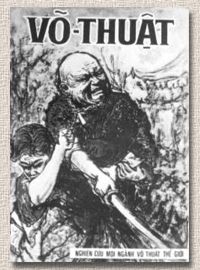
The back of the Master’s house had rotted nearly to the point of collapse. With the generous contribution of our fourth junior brother, Lạc Hà — a newly initiated student and Secretary General of the Martial Arts Monthly — we had it repaired and fully wired with electricity, turning it into a place for training and practice.
One evening in 1973, after an intense training session, the Master confided in me privately:
— Nam Anh! The little I know of Wing Chun, I have already passed on entirely to you5. The time has come for you to seek out the complete essence of our school elsewhere. Tonight, I will take you to meet a fellow brother of our lineage whose skill surpasses mine many times over — only he is capable of teaching you the Five Forms of Wing Chun.
Alas, I was to be deeply disappointed. After many failed attempts to secure an audience, this figure finally agreed to receive us. He was an elder master past sixty, with a deep and stern demeanor. Coldly refusing our offered gifts, he replied bluntly:
— Grand Master Tế Công once said to me: “…Among the hundred schools of thought in China, no one has learned the Five Forms. Now I pass them to you — guard them carefully for yourself alone.” Therefore, I regret to tell my junior brother that I cannot go against the will of my Master.
His face flushed with heat, the Master still pressed on:
— Senior Brother, if you were to pass them on to a disciple of our own school, would that not be entirely in keeping with the Master’s wishes?
The Master continued, his voice almost pleading:
— We two brothers are both nearing the end of our days. Tell me — is there truly anything in this world that belongs to us alone?
Pointing to the Yin-Yang diagram on the solemn ancestral altar, the elder master let out a cold laugh, his words sharp as the crack of a whip:
— Very well then! In that case, allow me to ask my junior brother one question: Within the black there is white, within the white there is black — so where is the black? And where is the white? If you cannot answer, then the gate is open and ready to see you out.
On the way home, the Master was lost in thought the entire time.
On another occasion, the Master and I sought an audience with a celebrated expert in Wooden Dummy techniques — only to suffer yet another bitter disappointment. After these failures, the Master buried himself in ancient manuscripts and secret texts, laboring in vain to decipher cryptic oral formulas. Little did he know that this endeavor would mark the beginning of a cruel fate…
In 1975, the turbulent currents of life swept us each in different directions. It was not until five years later, in 1980, that the Master and I had the chance to reunite — under sorrowful circumstances. Having just returned from a re-education camp, my marriage completely shattered, my entire worldly possessions amounting to nothing more than a few sets of clothing and an old bicycle. As for the Master, he was poorer than ever before, perpetually tormented by a severe stomach ulcer.
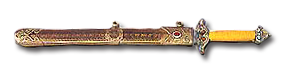
Handing me the Dragon-Phoenix Sword6 — a keepsake from a pure and noble love of his passionate youth — the Master’s voice trembled:
— Nam Anh! Find someone to buy this sword.
The moment the words left his lips, he quickly turned away to conceal the surge of emotion rising within him. My eyes burned, my throat dry and bitter… Outside, the rain poured down in sheets. In no time, the dead-end alley was flooded with dark water swirling with refuse. The entire lane was stifling with the stench of drains. I walked quickly through the rain…
Three days later, I returned and handed the Master back his sword — along with the money needed for his hospitalization. The Master held my hand tightly for a long while. Struggling to hold back his tears, his eyes reddened as he noticed that on my finger, a keepsake of equal value was no longer there.
On the stove, the water had begun to boil. Somewhere nearby, a faint groan broke the silence.
I fed the Master spoonful by spoonful of porridge, and a faint color returned to his face. His voice still weak, the Master whispered:
— The doctor says I need another operation — and to think, this will already be the third time!
He paused to catch his breath.
— I thought I had discovered so much, and yet…
— Master, I am certain that the Five Forms Qigong will restore your health completely.
— It is too late now… Nam Anh, my child7 — can you fulfill your Master’s final wish?
The Master gazed deeply into my eyes, as though searching for the sincerity of his beloved disciple.
— If only your Master could see with his own eyes the five forms of the Five Animals — just once in this lifetime. I dearly hope you will…
I rose to my feet and slowly performed all five forms of the Five Animals, movement by movement. When the five forms were complete, I continued with “Lục Điểm Bán Côn” (Six-and-a-Half Point Pole), “Hạc Hình Thư Bộ” (Crane Form Walking Steps), “Tiểu Mai Hoa” (Small Plum Blossom), and “Đại Mai Hoa” (Great Plum Blossom). Throughout, the Master sat propped against his pillow, watching intently. His gaunt face suddenly brightened, suffused with a wave of joy.
In writing these lines, I offer with deepest reverence a heartfelt incense of remembrance to a venerable Master — one who devoted his entire life to the Way of Martial Arts, who humbled himself in order to rise to the rank of Grand Master, and who, with all his passion and integrity, remains forever a shining example of courage, perseverance, and profound humanity.
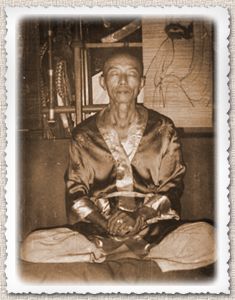
Note: Martial Arts Master Hồ Hải Long passed away in 1988 without having had the chance to see his senior disciples one last time. His funeral was held in the simplest and most sorrowful of manners — much like the final years of his life…
- In Traditional Eastern Medicine, a pulse that is deep and faint indicates severely depleted vital energy. The prospect of recovery is very slim.
- The transitional moment between the old year and the new. To welcome this sacred hour, Vietnamese customs include many distinctive traditions — children in particular delight in sitting up through the night to tend the great pot of bánh chưng (sticky rice cake) over a glowing fire.
- At that time, we were a group of young martial arts masters full of passion and ideals, with soaring ambition and an iron belief in the future of the nation’s youth. We compiled and published numerous books and the Martial Arts Monthly — the only martial arts journal of the 1960s — with the aim of reviving Vietnam’s traditional martial heritage. Most of those young masters have since become Grand Masters across the world, including Vũ Đức, Hàng Thanh, Hạ Quốc Huy, Huỳnh Ninh Sơn, Từ Võ Hạnh, and others.
- “The greatest enemy is the self, and to conquer oneself is truly a March of Ten Thousand Li.” (Words of Grand Master Nguyên Minh)
- The Vietnamese people have a tradition of honoring and celebrating individual achievement. As such, parents often refrain from using informal pronouns with children who have attained a certain rank or position in society, as a way of expressing respect and parental pride.
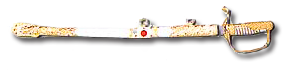
- The Master’s entire worldly possessions consisted of a number of old documents — some written in his own hand — and two treasured swords: the Seven Stars Sword and the Dragon-Phoenix Sword. The latter was a keepsake bearing witness to an unfinished love story between the young Hồ Hải Long and a woman of his era, who later became Trúc Lâm Nương — a Buddhist nun renowned for her profound virtue and mastery of the Dharma. Among the Four Sacred Creatures (Dragon, Unicorn, Tortoise, Phoenix), the Dragon and Phoenix are two cultural symbols that have coexisted throughout four thousand years of Vietnamese civilization, forever yearning for the day of their union.
- Throughout the sixteen years prior, that was the one and only moment the Master had ever addressed me as “Master and child.”