A Discourse on Chi Kung
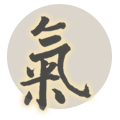
Modern scientific civilization, despite having accumulated an immense body of knowledge, has yet to arrive at a satisfactory conception of a single overarching principle that governs the entirety of our understanding of the universe — something that Eastern thought has long addressed through the concept of “Khí” (Qi).
Nevertheless, a point of convergence exists between the two systems of thought: the intuitive perception that the human body constitutes a Microcosm existing within the Macrocosm, and that it operates according to the same laws that govern the Macrocosm. As a Chinese proverb states: “To understand the Microcosm is to understand the Macrocosm.”
“Khí” is the essential, all-encompassing force that pervades Heaven and Earth and is the origin from which all things arise. The vast primordial Qi is divided into three forms:
- Heavenly Qi (Thiên Khí) — belonging to Yang, it governs the Earth and is expressed through the combined influence of the Sun, the Moon, and all other celestial bodies upon living beings on Earth.
- Earth Qi (Địa Khí) — belonging to Yin, it is expressed as the energy emanating from the Earth, generating the nutrients necessary to sustain life as received from Heavenly Qi.
- Human Qi (Nhân Khí) — the vital energy that circulates within the human body, formed through the harmonious union of Heavenly Qi and Earth Qi. This is expressed in the principle: Heaven gives birth, Earth nourishes, Humanity completes.
The emergence of the first human beings is described in very ancient writings, and these accounts correspond remarkably with the most prominent theories of cosmology and biology: “Primordial beings, still in their most rudimentary form, were born of the union of Yin and Yang through cosmic radiation, and underwent countless evolutionary transformations over millions upon millions of years before becoming the first human species on Earth.”
The vital force within each human being is derived in part from what is inherited from one’s parents at birth (Tiên Thiên Khí — Pre-Heaven Qi), and in part from the combination of Heavenly Qi and Earth Qi — in the form of air, food, and cosmic radiation — transformed within the five viscera (the principal organs: Heart, Liver, Spleen, Lungs, and Kidneys) (Hậu Thiên Khí — Post-Heaven Qi). Vital energy, or Qi, is further divided according to its function into Vệ Khí (Defensive Qi, which protects the body) and Vinh Khí (Nutritive Qi, which nourishes the muscles and flesh).
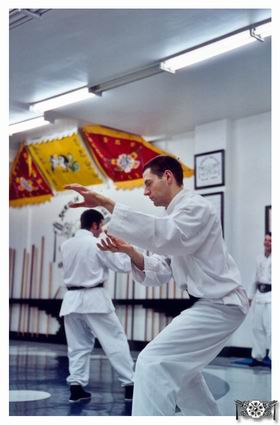
Pre-Heaven Qi, formed at the moment of conception, plays a vital role throughout a person’s entire life. If at birth the Pre-Heaven Qi is weak or insufficient, illness and affliction will inevitably follow in later life — as the saying goes: “When Pre-Heaven is deficient, Post-Heaven cannot compensate.” While not entirely equivalent, this concept bears a notable resemblance to the modern theory of genetic inheritance. A person’s Pre-Heaven Qi gradually diminishes over the course of their lifetime until it is exhausted — and the person dies. The Taoist arts of longevity practiced by Taoist sages (Chân Nhân) are methods of cultivation aimed at slowing the aging process and replenishing vital energy — much like the training methods of the martial arts.
Post-Heaven Qi is equally important, as it can supplement Pre-Heaven Qi through the air we breathe and the food we consume. The Classic of the Yellow Emperor states: “One who does not eat properly does not live according to the principles of health cultivation.” This is to be understood as the importance of making appropriate and discerning choices in one’s diet. For this reason, in Traditional Eastern Medicine, the absorption of medicinal herbs has always been emphasized and applied in treatment. A deep understanding of Heavenly Qi and Earth Qi also enabled the ancients to develop the art of Feng Shui — a field of applied knowledge capable of modifying, in whole or in part, a person’s karma or destiny.
From this same conception of Qi, the state of illness or health in the human body is understood in Eastern thought as a condition of imbalance or balance in the Yin-Yang vital energies.
Definition of Chi Kung
Literally, the term “Khí Công” (Chi Kung / Qigong) means the art and discipline of cultivating vital energy. Chi Kung has its origins in ancient methods dating back over 3,000 years, developed for the purpose of health cultivation and longevity. Although some knowledge of acupuncture and health exercises has been widely disseminated, the secrets of Chi Kung were, until relatively recently, transmitted exclusively within martial arts schools and the Buddhist and Taoist religious traditions. It is only in the past thirty years or so that these secrets have been more broadly shared through books, publications, and formal instruction.
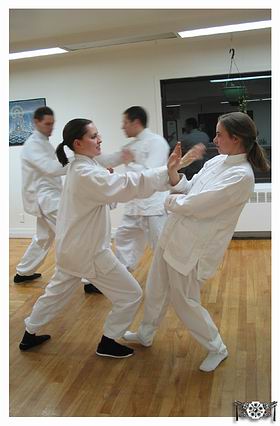
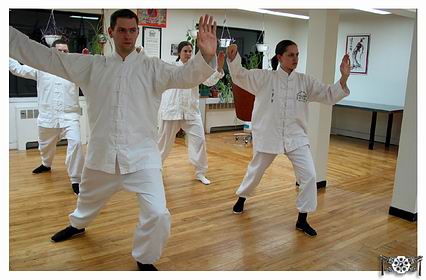
In truth, Chi Kung has a great many applications — however, in our Chi Kung class curriculum, we focus on its therapeutic dimension, that is, its healing effects. Students are trained in a system of techniques designed to cultivate Qi, gather and circulate it throughout the entire body, and strengthen overall health. Since Chi Kung practice does not require great physical exertion, it is accessible to people of all physical conditions. Chi Kung is not only beneficial for those who are ill — it also serves as a powerful means of disease prevention for those who are in good health.
The benefits of Chi Kung include:
- Regulating and improving sleep quality
- Enhancing the capacity for concentration
- Reducing headaches
- Regulating metabolic issues related to body weight (underweight or obesity)
- Developing flexibility and endurance
- Improving respiratory function and increasing breathing capacity
- Relieving stress and promoting a state of calm and inner peace
- Reducing joint pain (back pain, rheumatism, etc.)
- Strengthening the immune system and the body’s natural resistance
- Generating an abundant source of vital energy
- And much more…
Naturally, results vary from person to person, as Chi Kung aims to restore the balance of Yin and Yang and the natural functioning of the body.